IBM and Oak Ridge used a quantum workflow to model fusion materials

IBM, Oak Ridge National Laboratory, and Cleveland Clinic used a hybrid quantum, classical, and AI workflow to model molten salts that could breed fuel inside a fusion reactor. It is a first computation in that pipeline, not proof of advantage over classical methods.
01

web · IBM Quantum

Modeling the chemistry of fusion reactor material

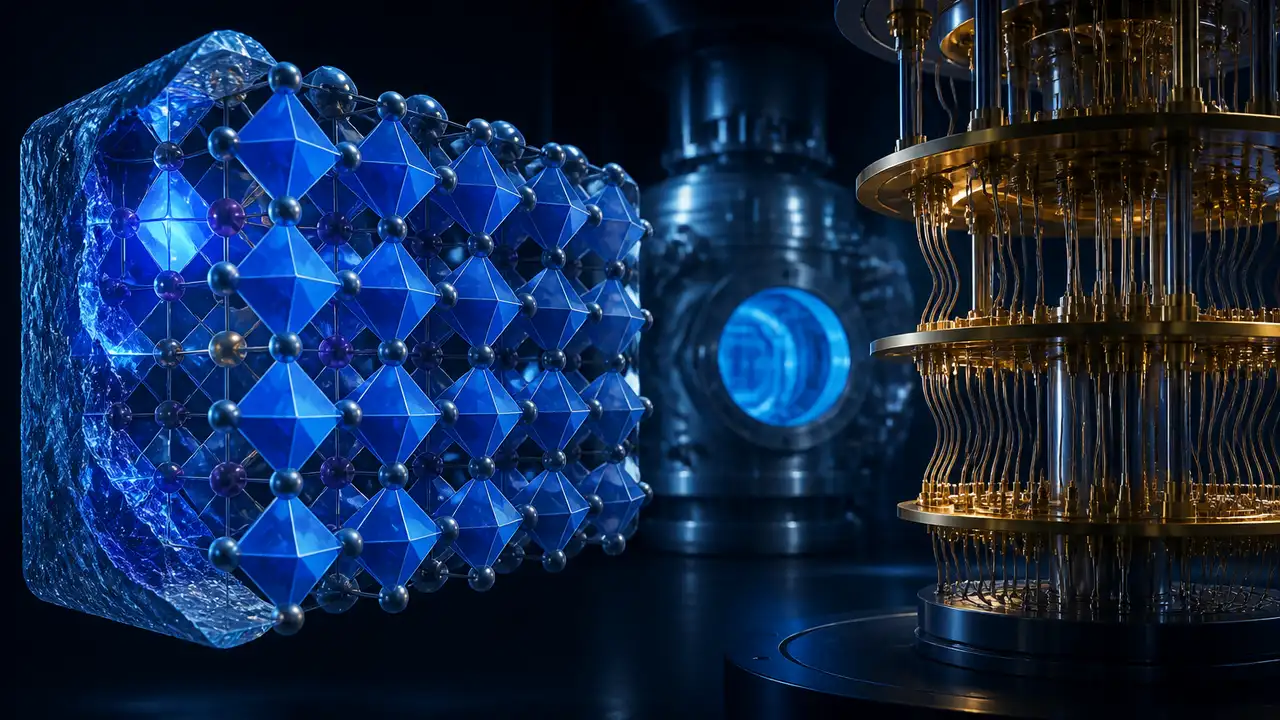
Technical visual explainer of the hybrid workflow used to calculate molecular configurations in lithium-beryllium-fluoride molten salt.

webSource preview · opens the originalOpen original →

What changed

Researchers calculated nine molecular configurations of a molten salt relevant to fusion fuel breeding using a workflow that divided work among quantum processors, classical high-performance computing, and AI-assisted optimization. The target matters because the salt must absorb neutrons, produce tritium, release that fuel, and survive a harsh reactor environment. Rather than asking a quantum computer to solve the entire materials problem, the team assigned it a bounded chemistry task inside a broader scientific system.

02

web · Oak Ridge National Laboratory

ORNL, Cleveland Clinic, and IBM achieve fusion-material computations

National-laboratory account of the first-known quantum computations on candidate molten-salt configurations for fusion fuel production.

webSource preview · opens the originalOpen original →

What remains unproved

The result does not show a working fusion blanket, a superior salt formulation, or a quantum speed advantage over every classical approach. Present quantum hardware remains noisy, and useful answers depend on substantial classical computation and careful error handling. Nine configurations are a narrow slice of a large chemical and engineering search space. Reactor materials must also meet corrosion, heat-transfer, radiation, supply, maintenance, and economics tests that a molecular calculation alone cannot settle.

03

Reddit · r/fusion

Quantum computers identify nuclear fusion fuel chemistry

Technical community discussion that helps frame the milestone's significance and the need to distinguish a first computation from useful advantage.

redditSource preview · opens the originalOpen original →

What to watch

Watch for the peer-reviewed methods, classical baselines, error budgets, and predictions that experimental chemists can test. The strongest follow-up would use the hybrid method to narrow a materials search, then validate a selected composition in the laboratory. Track whether later work handles larger systems with less classical overhead and whether quantum resources improve accuracy, cost, or time to answer. Fusion relevance will grow only when computational results feed measurable materials decisions.

View this collection on HRVSTR →