The Energy Department is linking national labs for AI science

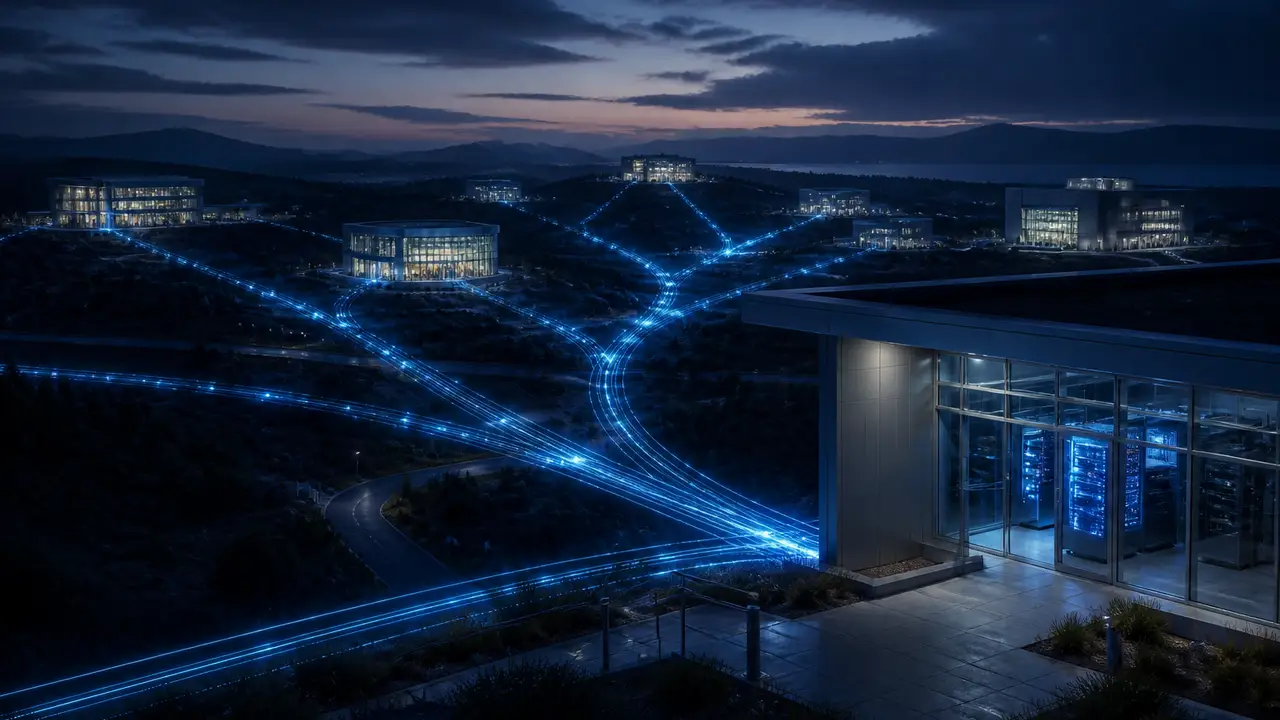
The Department of Energy's Genesis Mission is linking national-lab instruments, scientific datasets, supercomputers, quantum systems, and commercial AI tools into a shared discovery platform. The first project portfolio was selected in July 2026.
01

web · U.S. Department of Energy

Genesis Mission

Official portal for the national AI-for-science platform, participating organizations, research access goals, and current program material.

webSource preview · opens the originalOpen original →

What changed

The Department of Energy has selected nearly 300 initial projects and is organizing national-lab data, instruments, supercomputers, AI systems, and quantum resources around shared scientific challenges. Commercial model and cloud providers are contributing tools and computing. The intended change is practical: a researcher could move from a question to simulation, analysis, experiment, and recorded evidence through connected infrastructure rather than arranging each resource separately. The program covers energy, materials, biology, discovery science, and national security.

02

web · U.S. Department of Energy

First Genesis Mission projects selected

Official July 2026 announcement of the first project portfolio and the program's intended AI-enabled scientific workflows.

webSource preview · opens the originalOpen original →

What remains unproved

A connected platform does not by itself double scientific output or improve the quality of discovery. Models can produce plausible errors, and sensitive federal data can limit access and independent review. Partner contributions may create lock-in or uneven visibility into methods. Researchers still need well-designed experiments, domain expertise, provenance, negative results, and reproducible records. The program has not yet shown that its projects discover useful materials, treatments, or energy systems faster than comparable teams using existing tools.

03

web · U.S. Department of Energy

Genesis Mission national science and technology challenges

Detailed challenge areas spanning materials, energy, biology, scientific instruments, modeling, and qualification of discoveries.

webSource preview · opens the originalOpen original →

What to watch

Track published benchmarks that compare project time, cost, and accuracy with earlier scientific workflows. Strong evidence would include prospective predictions followed by laboratory confirmation, complete method records, and outside teams reproducing the result. Watch who receives access, how projects document model and data provenance, and whether failed hypotheses are preserved. The platform should also show that teams can move work among vendors and national-lab systems without losing records or becoming dependent on one closed model.

04

web · arXiv

Accelerating Scientific Research with Gemini

Case studies of researchers using advanced models on open questions, useful as evidence of techniques and the need for expert verification.

webSource preview · opens the originalOpen original →
View this collection on HRVSTR →